
 Business License

Grinding Balls for Gold Ore Processing: Fine Grinding and Cyanidation Compatibility
Gold recovery begins with liberating the metal from its host rock, and grinding media does that work. Gold ores present a specific combination of demands — fine grinding for liberation, abrasion from quartz-rich gangue, and chemical interaction with the cyanide circuit downstream. This guide covers how grinding balls behave in gold plants and how to select media that protects both recovery and costs.
1. How Gold Ore Is Prepared for Recovery
Gold is almost never visible in the ore feed. It occurs as fine particles locked inside quartz, sulfides, or other gangue minerals, and it can only be extracted once those particles are exposed. The comminution circuit — crushing followed by grinding — is the first stage of that liberation process.
A typical gold plant runs a primary crusher, a SAG or ball mill in the main grinding circuit, and often a regrind circuit for the tails or concentrate. The target grind size usually falls in the range of 75 to 150 microns for conventional cyanidation, and finer for refractory or preg-robbing ores.
Recovery responds sharply to grind size within this window. Moving from a coarse product to a slightly finer product can lift leach recovery by several percent on many ores, which is why the mill circuit receives so much attention in gold plant design. The media that sets the grind therefore sits close to the heart of plant economics.
Grinding media is the main consumable in this chain. The balls must break the rock to the target size distribution without wasting energy, without contaminating the pulp, and at a consumption rate that keeps the media budget within plan.
2. The Role of Grinding Media in Gold Liberation
Liberation is about exposing gold surfaces to the leach solution. If the ore is under-ground, gold stays locked inside gangue particles and cyanide cannot reach it, dragging recovery down. If it is over-ground, fine gangue slimes consume reagent and complicate thickening and filtration.
The media charge controls where the grind lands. Ball size distribution, hardness, and charge level all influence the product size distribution coming out of the mill. A stable, well-sized charge produces a consistent grind, and consistency is what leach operators depend on.
Consumption of media also affects liberation indirectly. Worn media releases iron fines into the slurry, which can coat gold surfaces or react with reagents. This is why media quality and metallurgy in gold circuits is not only a cost question — it is a recovery question.
Classification completes the loop. A ball mill in a gold plant normally operates in closed circuit with hydrocyclones, which return oversize material for another pass. The media charge and the cyclone settings act on each other, so a change in ball size distribution usually requires a corresponding adjustment to the cyclone operating pressure.
3. Wear Mechanisms in Gold Ore Mills
Gold ore gangue is typically hard and abrasive. Quartz, the most common gangue mineral, ranks about 7 on the Mohs scale, which means every ton of ore grinds the balls as aggressively as the balls grind the ore. Abrasive wear is the dominant mechanism in most gold ball mills.
Impact wear matters too, particularly in SAG mills and in ball mills with coarse feed. Large balls and dense feed generate high-energy collisions that can crack or break brittle media. Breakage is doubly expensive in gold circuits because broken fragments not only waste media but also disturb the downstream classification.
Corrosion is the third factor, and it is ore-dependent. Sulfide-bearing gold ores create acidic, oxidizing slurry conditions that accelerate surface wear on low chromium media. In these circuits, chromium content becomes a recovery-relevant specification, not just a wear-relevant one.
Consumption rates reflect this mix of mechanisms. A plant grinding quartz-rich oxide ore with medium chrome balls might consume roughly 0.5 to 0.7 kg per ton, while the same mill on hard sulfide ore can climb to 0.9 to 1.2 kg per ton. Tracking consumption by ore type, not just by month, isolates the effect of feed changes from media changes.
4. Selecting the Right Ball Grade for Gold Ores
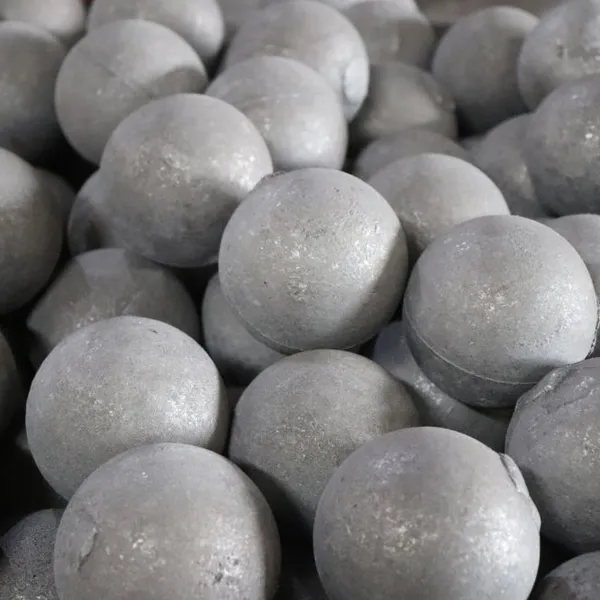
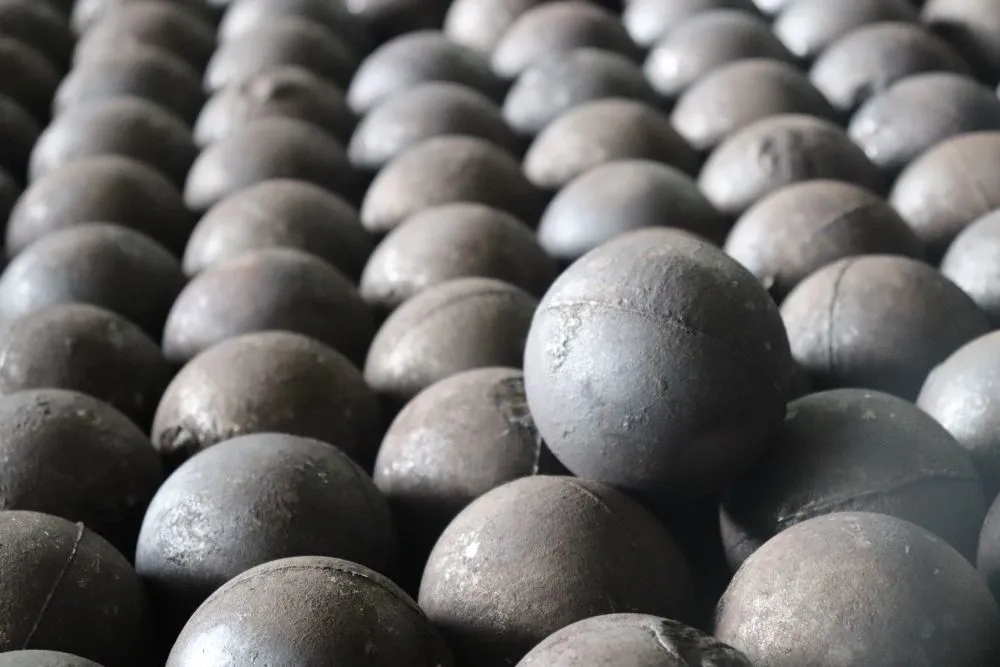
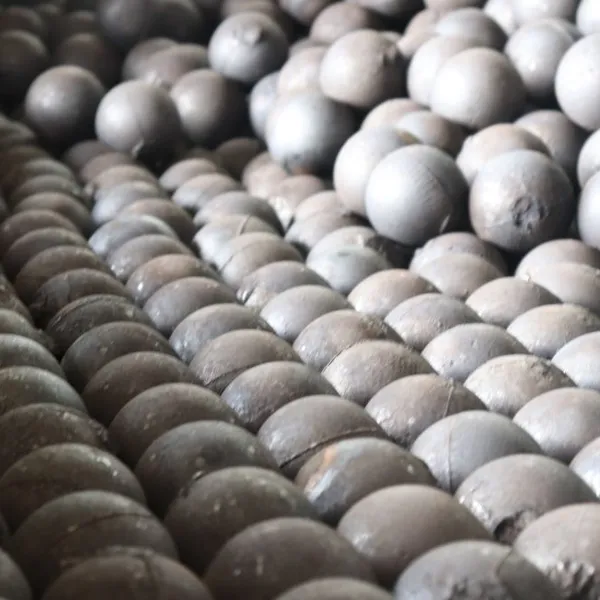
Most gold ball mills run medium to high chrome cast balls, typically Cr 8% to 18%, sized from roughly 50 mm to 80 mm in the primary circuit. The chromium provides the wear resistance that quartz-rich ore demands while keeping the purchase price within a sensible band.
For oxide ores with softer gangue, medium chrome grades at the lower end of the range are usually sufficient. For sulfide ores and harder feeds, high chrome grades deliver meaningfully lower consumption, and the premium typically pays back within a few months of operation.
| Ore Type | Typical Feed | Recommended Media | Typical Diameter |
|---|---|---|---|
| Oxide gold ore | Soft to medium | Medium chrome cast (Cr 8%–12%) | 50–70 mm |
| Sulfide gold ore | Medium to hard | High chrome cast (Cr 12%–18%) | 60–80 mm |
| Refractory / regrind | Fine, abrasive | High chrome or cylpebs | 20–40 mm |
| SAG mill feed | Coarse, dense | Forged or high chrome, large dia. | 100–140 mm |
Ningguo Huafeng Wear-resistant Materials Co., Ltd. supplies gold operations across this full spectrum, from medium chrome ball mill grades to forged balls for SAG duty, and works with plant metallurgists to match grade and size to the specific ore blend.
Some time ago, an oxide gold operation in Central Asia tested a medium chrome grade against its incumbent low chrome balls. The medium chrome grade cut consumption by roughly 25% on the same feed, and the small hardness gain carried no measurable downside in the plant's gentle mill conditions.
5. Fine Grinding and Regrind Circuits
Refractory gold ores and preg-robbing ores need finer liberation than standard cyanidation can recover. Regrind circuits address this by taking the tails or the concentrate and grinding it again to a finer size, often below 50 microns.
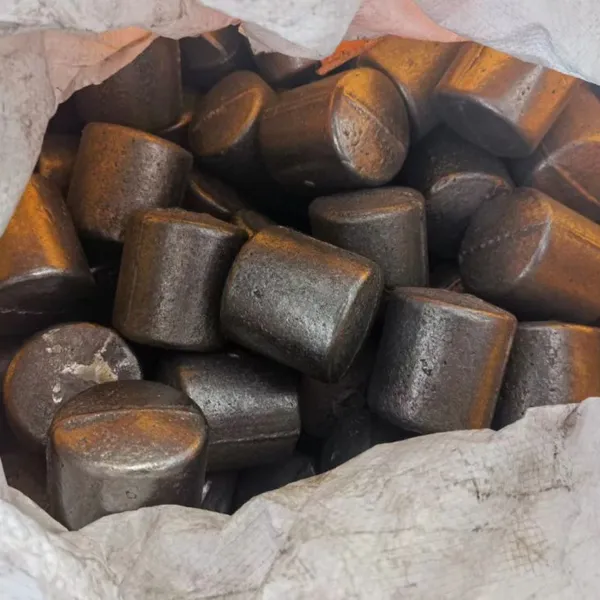
Regrind duty changes the media calculus. Small high chrome balls and grinding cylpebs dominate because they deliver the surface area needed for fine grinding. Huafeng produces grinding cylpebs specifically for these circuits, where the cylindrical shape improves energy transfer in fine grinding.
Stirred mills are increasingly used for ultra-fine grinding of refractory gold. These machines use very small media, often 1 to 12 mm, and the media selection criteria — hardness, density, and shape uniformity — differ from conventional tumbling mills.
6. Cyanidation Compatibility: Iron Contamination Concerns
Cyanide leaches gold by dissolving it into solution, and the chemistry of the slurry matters enormously. One known concern is the interaction between iron from grinding media and the leach chemistry, particularly in ores with complex sulfide mineralogy.
In sulfide-rich ores, iron released from media can contribute to the formation of passivating layers on gold surfaces, or promote the decomposition of cyanide through iron-cyanide complex formation. Well-chosen media with higher chromium resists corrosion in these slurries, limiting the iron that enters the system.
The practical message is that media selection and leach chemistry cannot be separated. Plants with challenging gold chemistry should involve the metallurgist in the media specification, and suppliers with process experience — such as Huafeng's technical team — can advise on chromium levels that balance wear life with slurry compatibility.
Complex ores deserve extra care. Ores carrying arsenic, antimony, or high carbonate content can behave very differently in the leach circuit, and the media specification should be reviewed when a new ore blend is introduced rather than assumed to carry over from the previous blend.
7. SAG and Ball Mill Configurations in Gold Plants
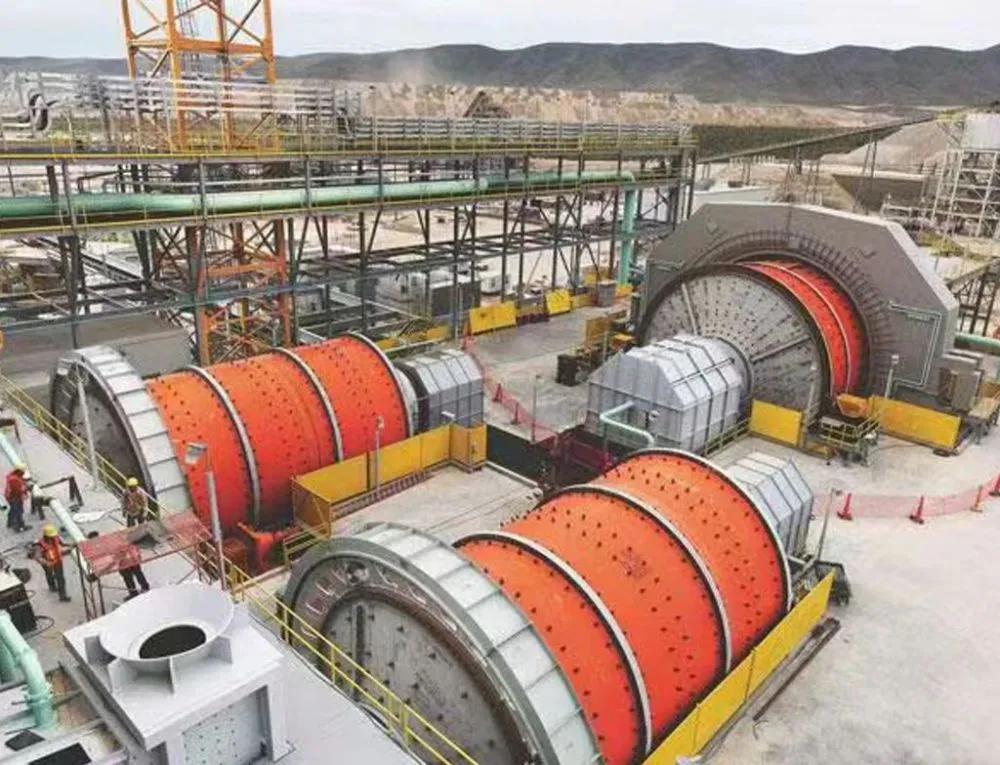
Gold comminution circuits come in two dominant shapes. The first is a SAG mill followed by a ball mill, common in larger operations with competent ore. The second is a single ball mill circuit, typical of smaller plants and softer ores.
SAG mills place the heaviest demands on media. Charge volumes are large, impact energies are high, and ball consumption can run significantly higher per ton of ore. Forged steel balls in diameters above 100 mm are the usual choice, valued for their impact toughness in this regime.
Ball mills in gold plants run the media charge that defines the grind quality. Graded charges — a blend of two or three diameters — are standard, keeping the mill both capable of breaking coarse feed and efficient at fine grinding at the same time.
| Circuit | Media Type | Diameter | Key Requirement |
|---|---|---|---|
| SAG mill | Forged steel balls | 100–140 mm | Impact toughness |
| Primary ball mill | Cast medium/high chrome | 50–80 mm | Wear resistance balance |
| Regrind mill | High chrome balls / cylpebs | 20–40 mm | Surface area for fine grinding |
| Stirred mill | Small forged / ceramic | 1–12 mm | Shape uniformity, density |
The configuration itself influences media cost. A SAG-ball mill circuit typically spends more per ton on media than a single ball mill circuit because SAG media consumption is inherently higher, and the plant budget must reflect both legs of the circuit.
8. Consumption Benchmarks and Cost Control
Gold plant media consumption typically ranges from roughly 0.4 to 1.2 kg per ton of ore, depending on ore hardness, grind size, and media grade. Sulfide ores and finer grinds sit at the higher end; oxide ores and coarser grinds at the lower end.
Consumption is the number that governs the media budget, and it is worth benchmarking monthly against both plan and historical baseline. A drift of 0.1 kg per ton in a 10,000 ton-per-day plant is roughly one ton of media per day — a material sum over a year.
Controlling consumption starts with the right grade, but operating discipline matters as much. Stable feed rate, correct slurry density near 65% to 75% solids, and a consistent top-up schedule all keep the charge healthy and the consumption number honest.
Measurement discipline completes the picture. Weighing additions, tracking charge level, and reviewing consumption against tonnage on a weekly basis turns media cost from a line item into a managed variable. Plants that monitor this way consistently find and fix drift earlier than those that review it quarterly.
9. Case Notes from Gold Operations
Some time ago, a West African gold plant processing a quartz-rich oxide ore ran a comparison between medium chrome and high chrome balls in two parallel ball mills. The high chrome mill showed roughly 18% lower consumption and a tighter product size distribution, which simplified downstream thickening and filtration.
A while back, a sulfide ore operation in South America switched its regrind circuit from small forged balls to high chrome cylpebs. The plant reported improved liberation at the same installed power, with media consumption per ton of concentrate falling by roughly 15%.
Both cases illustrate the same principle: in gold processing, media choices ripple beyond the mill into recovery chemistry and plant economics. The cheapest ball per ton is rarely the cheapest per ounce of gold recovered.
10. FAQ: Grinding Balls for Gold Ore
10.1 What size grinding balls are used in gold ore ball mills?
Primary gold ball mills typically use balls from 50 mm to 80 mm in a graded charge, with the top size matched to the feed top size. Regrind circuits use smaller media from 20 mm to 40 mm, and stirred mills for ultra-fine grinding use media down to 1 mm to 12 mm.
10.2 Do grinding balls affect gold recovery?
Indirectly, yes. Grinding media sets the liberation size, and under-grinding locks gold inside gangue while over-grinding creates slimes that hurt leach performance. Media wear also releases iron into the slurry, which can interact with cyanide chemistry in sulfide ores, so media metallurgy is part of the recovery equation.
10.3 What chromium grade is best for gold ore grinding?
Most gold ball mills perform well with medium to high chrome cast balls at Cr 8% to 18%. Oxide ores can run at the lower end, while sulfide ores and hard quartz gangue justify the higher end. The chromium protects against both abrasive wear and slurry corrosion, which is why it is the default choice in gold duty.
10.4 Are forged balls used in gold processing?
Yes, mainly in SAG mills and large-diameter ball mills where impact toughness matters. Forged balls in diameters above 100 mm resist fracture under heavy impact better than most cast grades. In conventional ball mill duty on gold ore, cast high chrome balls remain the more common and often more economical choice.
Recently Posted
-
ADI and CADI Grinding Balls: The Next Generation of Work-Hardening Grinding Media
September 4, 2026Austempered ductile iron (ADI) and carbidic austempered ductile iron (CADI) represent a newer class of grinding media that hardens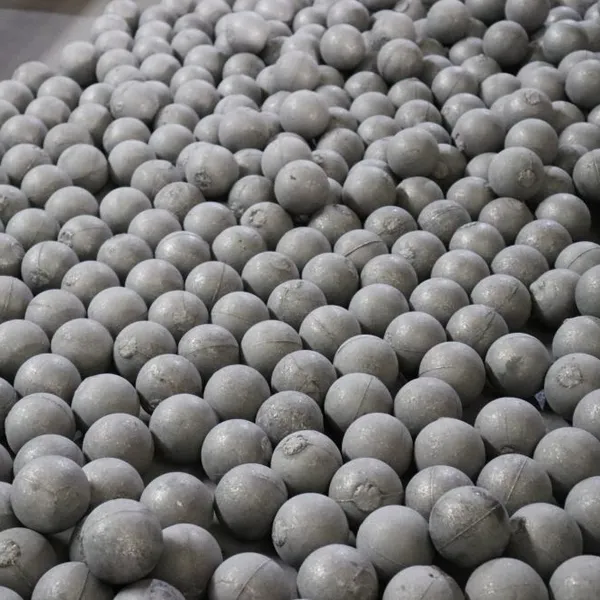 Read More
 -
How Grinding Ball Quality Is Tested: From Spectrometer Analysis to Drop Ball Testing
September 4, 2026Grinding ball quality is not a matter of opinion — it is a chain of measurable parameters verified by laboratory equipment. Spectr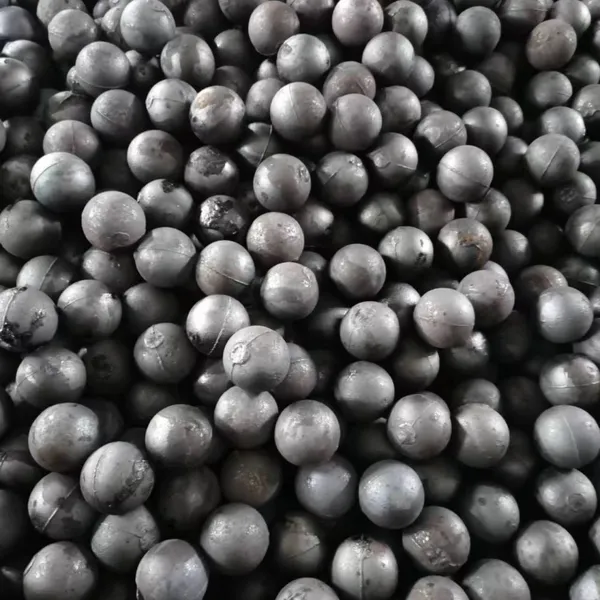 Read More
 -
How to Select a Grinding Ball Supplier: 8 Factors Beyond Price
September 3, 2026A procurement manager at a mid-sized mining company once told us about the grinding ball order that nearly shut down his operation Read More
 -
Forged vs. Cast Grinding Balls: A Practical Comparison for Mining Operations
September 3, 2026An iron ore mine in Australia had been running forged steel grinding balls in its SAG mill for years without questioning the choic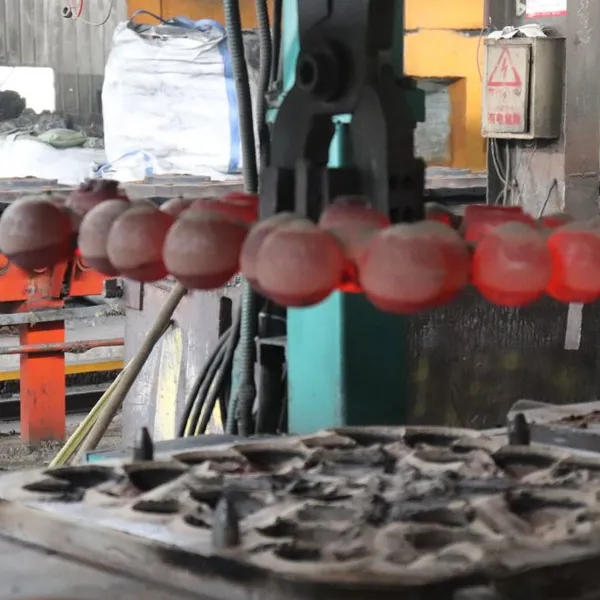 Read More

Contact Us
Recommended Products
-
 Chromium Alloy Cast Grinding Balls Cr 1%-30% High Hardness Low Breakage For Mining Ball Mill Cement PlantUS$ 600 - 2000MOQ: 27 Metric Tons
 -
High Silicon Chrome Alloy Cast Grinding Balls Cr 8%-12% High Hardness 62HRC Low Breakage Excellent Wear Resistance For Mining Cement Ball MillUS$ 1000 - 1500MOQ: 27 Metric Tons
-
Wear Resistant Steel Castings Customized Parts For Mining Cement Plant Ball Mill Hammer CrusherNegotiableMOQ: 1 Metric Ton
-
Forged Steel Grinding Balls HRC55-65 Low Breakage High Impact Toughness For Mining Cement Ball Mill SAG MillUS$ 600 - 1200MOQ: 27 Metric Tons
-
CADI Grinding Balls – Advanced Austempered Ductile Iron for SAG Mills, Work Hardening 60-63HRC, 8-25J/cm² Impact, 5%-10% Energy SavingUS$ 900 - 1500MOQ: 27 Metric Tons
-
Bimetal Mill Liner High Chrome + Carbon Steel Composite High Hardness HRC58-63 2-3x Service Life For Ball Mill SAG Mill MiningUS$ 1800 - 5000MOQ: 1 Metric Ton
-
Crusher Hammer Head High Manganese Steel / CADI / High Chrome Alloy For Hammer Crusher Mining CementNegotiableMOQ: 1 Metric Ton
-
Chromium Alloy Cast Cylpebs Cr 1%-15% High Hardness Low Breakage For Mining Cement Fine GrindingUS$ 600 - 1200MOQ: 27 Metric Tons
-
Chromium-Molybdenum Alloy Steel Mill Liner Medium/Low Cr-Mo High Wear Resistance High Impact For SAG Mill Ball Mill Mining CementUS$ 1000 - 1800MOQ: 1 Metric Ton
-
High Manganese Steel Mill Liner Mn13Cr2 High Impact Toughness Work Hardening For Ball Mill SAG Mill Mining CementUS$ 1200 - 1500MOQ: 1 Metric Ton
-
Chromium Alloy Cast Grinding Balls Cr 1%-3% Hardness ≥45HRC Economical General Purpose For Small Medium Ball MillsUS$ 600 - 2000MOQ: 27 Metric Tons
-
Austempered Ductile Iron Mill Liner High Hardness High Toughness For Ball Mill SAG Mill Long Service LifeNegotiableMOQ: 1 Metric Ton
-
Ultra-High Hardness High Carbon Cr-Mo Alloy Grinding Balls HRC60-68 Extreme Abrasion Resistance For Hardest Ore SAG MillsUS$ 1000 - 2000MOQ: 27 Metric Tons
-
Extra High Chrome Cast Iron Grinding Balls Cr 20%-30% HRC62-65 Extreme Wear Resistance For SAG Mills Heavy MiningUS$ 1000 - 1800MOQ: 27 Metric Tons
-
Low Chrome White Cast Iron Grinding Cylpebs Cr 1%-3% 45-55HRC High Toughness Low Cost For Cement Coal MillsUS$ 500 - 1200MOQ: 27 Metric Tons
-
ADI/CADI Austempered Ductile Iron Grinding Balls Work Hardening 60-63HRC 5-10% Energy Saving For SAG MillsUS$ 500 - 1200MOQ: 27 Metric Tons
-
Low Chrome Cast Grinding Balls Cr 1%-3% HRC45-55 Cost Effective For Cement Mills Coal Mills Soft OreUS$ 500 - 1000MOQ: 27 Metric Tons
-
Custom Size Cast Grinding Balls Any Diameter φ4.8-150mm Any Cr% 1%-30% Tailored Hardness For Unique Mill ConditionsUS$ 600 - 2000MOQ: 27 Metric Tons
-
High Chrome Cast Grinding Balls Cr 10%-30% Ultra Hardness 58-65HRC Extremely Low Breakage For Hard Rock MiningUS$ 600 - 2000MOQ: 27 Metric Tons
-
Forged Steel Grinding Balls HRC55-65 Low Breakage High Impact Toughness For SAG Mill Ball Mill MiningUS$ 600 - 2000MOQ: 34 Metric Tons